AI Coding Live News

OpenAI launches GPT-6.1 Terra: fast, low-cost computer use at $1/$5 per million tokens, half the price of GPT-5.6 Terra and GPT-6.1 Sol

On Oct 26 OpenAI released GPT-6.1 Terra, an efficient model for visual reasoning, precise computer use and natural writing. It is rolling out today to Plus, Pro, Enterprise and Edu users in ChatGPT Work and Codex, and in the API as gpt-6.1-terra. Standard API pricing is $1 input, $0.05 cached input and $5 output per million tokens, which OpenAI says is 50% lower than GPT-5.6 Terra and GPT-6.1 Sol, with a 1,050,000-token context window. By OpenAI's figures it scores 15 points higher than GPT-5.6 Terra on Agents' Last Exam at medium effort for about a third of the cost, and solves 50.3% of Terminal-Bench 4.0 at max effort.

OpenAI launches GPT-6.1 Terra: fast, low-cost computer use at $1/$5 per million tokens, half the price of GPT-5.6 Terra and GPT-6.1 Sol

Key Takeaways

  • Pricing (official docs): $1 input, $0.05 cached input, $1.25 for 30-minute cache writes and $5 output per million tokens; requests over 272K input tokens are billed at 2x input and 1.5x output; Batch/Flex are half price and Fast mode is 2x
  • Specs: 1,050,000-token context, 922,000 max input and 128,000 max output tokens, Jun 1 2026 knowledge cutoff; reasoning.effort from none to max, and tool calling requires the Responses API
  • Computer use (OpenAI figures): on Agents' Last Exam at medium effort it beats GPT-5.6 Terra by 15 points at about one-third the cost, and matches GPT-6 Astra at one-tenth the price per token; it finishes tasks over 3x faster than GPT-6 Astra and GPT-6.1 Sol
  • Coding and factuality (OpenAI figures): 50.3% on Terminal-Bench 4.0 at max effort, more than double GPT-5.6 Terra's published 21.5%; error rate on an internal error-inducing prompt set fell from 53.6% to 16.7% at low effort
  • Safety: OpenAI says it meets the Critical cybersecurity threshold under its Preparedness Framework and keeps the safeguards built for GPT-6 Astra

Cursor launches Agent SDK: agents as code with Markdown prompts, TypeScript tools, built-in evals, and hosted or self-run deployment

On Oct 26 Cursor announced that its Agent SDK is generally available. An agent's system prompt is written in Markdown and its tools in TypeScript; agents can be deployed on Cursor's hosted infrastructure or run on your own machines, and built-in evals measure every change. Cursor's docs say it uses the same Cursor SDK harness that powers Bugbot, Security Review, Approval Bot and Rollouts, can be triggered from source-control events, issue trackers, Slack or schedules, and is managed under Deployed Agents after deployment. Cursor has not published pricing or benchmarks.

Cursor launches Agent SDK: agents as code with Markdown prompts, TypeScript tools, built-in evals, and hosted or self-run deployment

Key Takeaways

  • Same harness: Cursor's docs say Agent SDK runs on the harness behind four of its own agents: Bugbot, Security Review, Approval Bot and Rollouts
  • Project layout: bot/instructions.md is the required always-on system prompt, each bot/tools/*.ts file is one typed tool, with folders for skills, MCP connections, subagents, channels, hooks and schedules, and evals live in evals/*.eval.ts
  • Triggers and deployment: runs can be triggered from source control, issue trackers, Slack, webhooks or schedules; deploy on Cursor-managed hosting or self-host, then manage under Deployed Agents
  • CLI: agent-sdk validate, run and eval check the project, run a real turn and run evals; Cursor says only run and eval need a Cursor credential
  • Cursor has not published pricing or benchmarks
A
Apple NewsroomAppleยท
๐Ÿ‘€0
๐Ÿ”ฅ82

Apple ships 27.2 updates: Siri AI adds French, Japanese, Korean, Portuguese and Spanish, and can now recall past conversations

On Oct 26 Apple released iOS, iPadOS, macOS, watchOS and visionOS 27.2, and Siri AI (beta), the assistant rebuilt on Apple Intelligence, now supports French, Japanese, Korean, Portuguese and Spanish in addition to English. Apple says Traditional Chinese, Norwegian, Turkish and Vietnamese will follow by the end of the year. Per the iOS 27.2 release notes, Siri AI can now recall past conversations and draw on more sources such as photos in Messages, Calendar attendees and voicemails. Siri AI is still unavailable in the EU on iOS, iPadOS and watchOS and in mainland China, and server-side features have daily usage limits; Apple says expanded access will be offered for a fee in the future.

Apple ships 27.2 updates: Siri AI adds French, Japanese, Korean, Portuguese and Spanish, and can now recall past conversations

Key Takeaways

  • Languages: Siri AI grows from English-only to 6 languages, adding French, Japanese, Korean, Portuguese and Spanish; Apple says Traditional Chinese, Norwegian, Turkish and Vietnamese arrive by year end
  • 5 platforms: iOS, iPadOS, macOS, watchOS and visionOS 27.2 shipped the same day, with Siri AI still labeled beta
  • New abilities (per iOS 27.2 release notes): recall of past conversations, more sources including photos in Messages, Calendar attendees and voicemails, plus one Excluded Apps setting
  • Limits: unavailable on iOS/iPadOS/watchOS in the EU, for mainland China accounts and for users under 13; server-side features have daily caps, and Apple says paid expanded access is coming
  • Devices: Apple Intelligence hardware such as iPhone 15 Pro and later and M1-or-later iPad and Mac, with device and Siri language set to the same supported language
Linked Models & Agents:
โšก Apple Intelligenceโšก AFM 3๐Ÿค– Siri AI๐ŸŒ Apple

Anthropic releases a Claude for Nonprofits plugin with fundraising, marketing and hiring skills built with ~30 organizations

On Oct 26 Anthropic released the Claude for Nonprofits plugin, a set of skills and connectors built with about 30 nonprofits. It covers the full fundraising cycle (finding funders, breaking down RFPs, drafting proposals and reports, donor stewardship), marketing, hiring and board work, and starts by having Claude map where the organization keeps its records and answer questions against the organization's own AI policy. It is installed automatically at no extra cost for verified nonprofits on Team and Enterprise plans. Anthropic says more than 25,000 nonprofits use Claude, and over 75% of them have fewer than 10 seats.

Anthropic releases a Claude for Nonprofits plugin with fundraising, marketing and hiring skills built with ~30 organizations

Key Takeaways

  • Scale (vendor-reported): more than 25,000 nonprofits use Claude, and over 75% of them have fewer than 10 seats, per the official article
  • How it was built: about 30 design-partner organizations, including the IRC, the Gates Foundation and International Justice Mission, tested early skills on real work and fed back changes
  • Pricing: the plugin is installed automatically at no extra cost on nonprofit Team and Enterprise plans; nonprofit discounts reach 75%, and about 90% in low- and middle-income countries, bringing Team seats to $3/user/month, with Claude Code included
  • Talent: Claude Corps is placing 1,000 early-career fellows in at least 400 US nonprofits, and Anthropic plans to extend it with Taproot for shorter pro bono projects
  • Onboarding: two official webinars run on Nov 10 (admins, data handling and AI policy) and Nov 12 (staff, day-one use)
ADSponsored

Mirendil, founded by ex-Anthropic researchers, unveils Fern: its first from-scratch model with up to 10M tokens of context

On Oct 26 Mirendil unveiled Fern, its first model, pretrained from scratch on its own Mirendil-Base (0.1-0.5T params) with a context window of up to ~10M tokens, about 0.5M lines of code or days of agent traces. Fern 0.1 got only a short round of post-training and targets AI R&D work such as auditing training data, debugging runs from logs and reading agent traces end to end. Vendor-reported: 73.4% on SWE-Bench Verified and 100% single-needle RULER retrieval at 10M, while multi-hop QA drops to 45% at 10M. Access is early-access only; no price or weights yet.

Mirendil, founded by ex-Anthropic researchers, unveils Fern: its first from-scratch model with up to 10M tokens of context

Key Takeaways

  • Scale and context (vendor-reported): Mirendil-Base has 0.1-0.5T params; Fern reads up to ~10.2M tokens (about 23 MB or ~0.5M lines of code, roughly Megatron-LM scale), per the official blog
  • Coding scores (run by Mirendil, OpenCode, 1 attempt): SWE-Bench Verified 73.4, SWE-Bench Pro v2-Hard 76.5, SWE Atlas QnA 53.2, DeepSWE v1.1 44.2, Terminal-Bench 4.0 just 6.1; Claude Opus 5.5 in the same table scores 98.2/100.0/66.4/74.2/66.4
  • RULER long context (vendor-reported): single-needle retrieval is 100% from 32K to 10M; multi-hop HotpotQA falls from 65% at 32K to 45% at 10M, with only 20 samples per 10M cell
  • Cost (vendor-reported): one researcher plus agents built Mirendil-Base in 3.5 months for under $10M of compute, with agents writing over 99% of the code, per the pretraining write-up
  • Availability: Fern is the smallest of three models; Base-Large (0.5-2T) and Base-XL (2-10T) are still pretraining; access is via early-access requests only, with no price or weights announced
Linked Models & Agents:
โšก Fern 0.1โšก Mirendil-Base๐ŸŒ Mirendil

Anthropic files its S-1 with the SEC for a Nasdaq IPO under ticker ANT; H1 2026 revenue was $16.29B, up 1,300% year over year

On Oct 26 Anthropic announced on its official X account and website that it has publicly filed a Form S-1 registration statement with the U.S. SEC and plans to list its Class A common stock on the Nasdaq Global Select Market under the ticker "ANT". The share count and price range have not been set, and Goldman Sachs and Morgan Stanley lead the underwriters. The prospectus shows revenue of $16.286B for the first half of 2026 (versus $1.163B a year earlier) and $4.585B for full-year 2025. The H1 operating loss narrowed to $693M, but fair-value changes on convertible notes and similar instruments pushed the reported net loss to $80.7B. Customers paying over $100K a year grew from more than 950 to more than 11,900 in twelve months.

Key Takeaways

  • Listing: Class A common stock on the Nasdaq Global Select Market under ticker ANT; share count and price range not yet set; Goldman Sachs and Morgan Stanley lead the deal (announcement)
  • Revenue: $41M in 2023, $386M in 2024, $4.585B in 2025, and $16.286B in H1 2026, up 1,300% year over year (S-1 prospectus)
  • Profitability: H1 2026 operating loss of $693M (vs. $2.135B a year earlier); a $72.4B fair-value change on convertible notes, derivative liabilities and SAFEs drove an $80.7B net loss
  • Costs: H1 2026 compute and infrastructure spend was $8.945B, 55% of revenue, down from 201% a year earlier
  • Customers: those paying over $100K TTM grew from more than 950 (Sep 30, 2025) to more than 11,900 (Sep 30, 2026), with more than 1,900 paying over $1M
  • Governance: the Long-Term Benefit Trust elects a board majority through Class T stock; non-voting Class N shares are held mainly by strategic partners
Linked Models & Agents:

Tencent Hunyuan open-sources Hy-SimulMT, a Chinese-English real-time simultaneous interpreting model with ~3s lag and live voice cloning

On Oct 26 Tencent Hunyuan (Tencent Hy) open-sourced Hy-SimulMT, a real-time simultaneous interpreting model for bidirectional Chinese-English speech-to-speech translation. It translates while the speaker talks, outputs both translated text and speech, and can clone the speaker's voice in real time. Six checkpoints landed on Hugging Face (30B-A3B translation-only and source-plus-translation Interleave variants, each in BF16, FP8 and GGUF), with the model card listing Apache-2.0; GitHub ships the SimulInfer serving stack and SimulTrain training tools. Vendor-reported: about 3s StreamLAAL on RealSI long-form audio, the lowest among compared systems.

Tencent Hunyuan open-sources Hy-SimulMT, a Chinese-English real-time simultaneous interpreting model with ~3s lag and live voice cloning

Key Takeaways

  • Size and variants: 30B-A3B MoE (about 3B active), six checkpoints: translation-only and Interleave (source plus translation), each in BF16, FP8 and GGUF (Hugging Face collection)
  • Latency (vendor-reported): about 3s StreamLAAL on RealSI long-form audio, the lowest among compared systems, with a GEMBA quality score above the compared open models and 4 of 5 commercial APIs
  • Short-form (vendor-reported): FLEURS 90.3, CoVoST2 75.5, ACL6060 81.2, RealSI-Sentence 84.7, the last being the top score in the table; Qwen3.8-LiveTranslate scores 88.4/82.1/80.5/84.4 in the same table
  • Human comparison: 18 real Chinese and English recordings of about 6 minutes each against 6 CATTI Level 1/2 interpreters; Tencent says quality was on par with often lower latency, and notes the result only covers this small test
  • Deployment: one SimulInfer deploy.sh command starts vLLM (>=0.31) plus a web/WebSocket service; speech output and voice cloning need a separate TTS service; llama.cpp support is not yet merged upstream (SimulInfer docs)
Linked Models & Agents:
โšก Hy-SimulMT-30B-A3Bโšก Hy-SimulMT-30B-A3B-Interleaveโšก Qwen3.8-LiveTranslate๐ŸŒ Tencent
O
Oracle@Oracleยท
๐Ÿ‘€3
๐Ÿ”ฅ81

Oracle unveils the Fusion Claw runtime with 25 agentic apps at AI World, and Fusion Companion lets employees run ERP and HCM work from ChatGPT

At Oracle AI World in Las Vegas on Oct 26, Oracle announced Oracle Fusion Claw, a new execution runtime for agents, and 25 Claw-powered Agentic Applications now available across ERP, HCM, supply chain (SCM) and customer experience (CX). It also introduced Fusion Companion and Fusion Agentic Home: employees describe a goal in natural language in supported AI tools such as ChatGPT or in the native Fusion interface, and the system picks and coordinates the transactions, workflows, approvals and AI agents needed, within existing identity, permission and approval controls. Oracle has not published pricing, benchmarks or a detailed rollout schedule.

Oracle unveils the Fusion Claw runtime with 25 agentic apps at AI World, and Fusion Companion lets employees run ERP and HCM work from ChatGPT

Key Takeaways

  • Runtime: Fusion Claw is a new agent execution runtime that Oracle says supports larger-scale and longer-running work, continuous replanning, deterministic execution and governed autonomy (press release)
  • Scale: 25 Claw-powered Agentic Applications are available now across the ERP, HCM, SCM and CX suites, including Ledger, Workforce Orchestration, Payroll Activity Workspace and Procurement Spend
  • Access: Fusion Companion works through supported AI tools such as ChatGPT and customer- or partner-built interfaces, with Fusion Agentic Home as the native entry point (Fusion Companion release)
  • Governance: all execution stays within existing identity, permissions, policies and approval controls, and decisions needing human judgment are escalated
  • Not disclosed: Oracle has not published pricing, benchmarks or a per-app rollout schedule

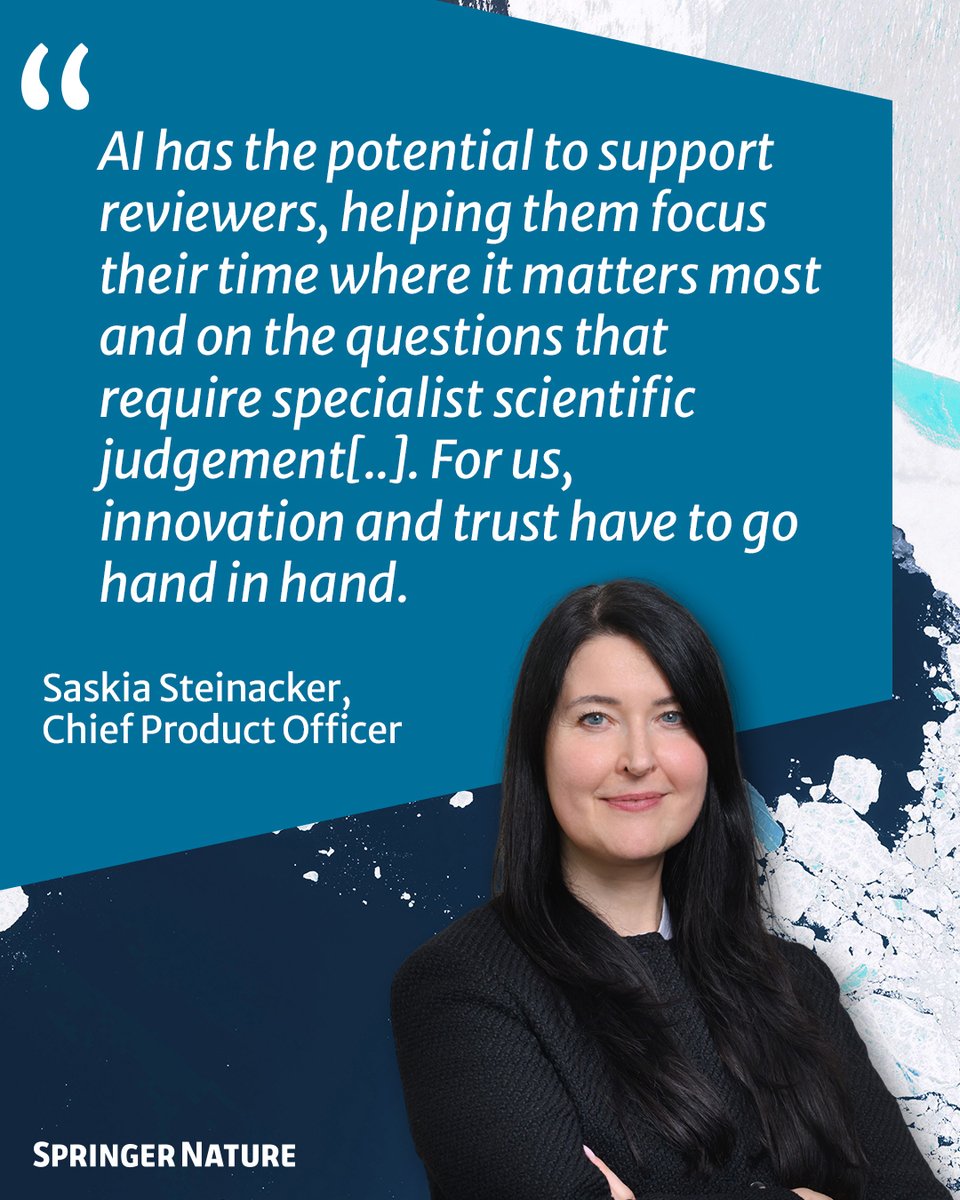
Springer Nature and Google DeepMind partner on an AI peer review assistant built on Gemini and the open-source ADK; a prototype is in testing and human reviewers keep final judgment

On Oct 26 Springer Nature, one of the world's largest research publishers, announced a research partnership with Google DeepMind to co-design an AI peer review assistant. It uses DeepMind's frontier Gemini models and builds on Google's earlier agentic research tools ScholarPeer and Deep Review to help reviewers navigate manuscripts, analyse large amounts of text, charts and figures, and flag areas that may need closer attention. The system is built with Google's open-source Agent Development Kit (ADK) and runs only inside Springer Nature's private Gemini Enterprise environment, so manuscript content stays in its secure environment. A prototype is being tested; the publisher stresses 'human first, AI second' and has not given a launch date or any performance data.

Springer Nature and Google DeepMind partner on an AI peer review assistant built on Gemini and the open-source ADK; a prototype is in testing and human reviewers keep final judgment

Key Takeaways

  • Partners: Springer Nature (publisher of the largest number of journals and books) and Google DeepMind, announced 2026-10-26 from London, Berlin and New York (press release)
  • Stack: frontier Gemini models plus Google's open-source Agent Development Kit (ADK), building on the ScholarPeer and Deep Review agentic research tools
  • Data isolation: runs only on Springer Nature's private Gemini Enterprise platform, keeping author and reviewer confidentiality
  • Status: prototype in testing; no launch date, journal coverage or accuracy figures have been published
  • Role: helps reviewers find areas needing attention, while final scientific judgment stays with human experts

Kimi apologizes for K3.1 Pro plan rate limits and wasted quota, gives every subscriber a one-time 25% monthly quota reset and trims subagent calls and output length

At 20:14 UTC on 2026-10-25, Moonshot AI's official account @Kimi_Moonshot (post) acknowledged rate limits and unnecessary quota consumption on the K3.1 Pro subscription plan, saying "these were our issues, and we should have fixed them sooner." Every subscriber on every plan gets a one-time usage reset that restores 25% of their monthly quota (usage below 25% resets to zero), equal to about one week of usage; usage bars update by end of day PST. Kimi also adjusted the plan's parameters and is cutting unnecessary subagent calls and output length so quota lasts longer.

Key Takeaways

  • Compensation: a one-time 25% monthly quota restore, about 1 week of usage (official post)
  • Users below 25% usage are reset to zero; applies to every subscription plan
  • Timing: usage bars update by end of day PST on Oct 25 (about 15:00 SGT on Oct 26)
  • Fix direction: fewer unnecessary subagent calls, shorter outputs and adjusted plan parameters
  • Context: K3.1 Pro launched Oct 23 with API pricing of $2/$10 per million tokens (vendor figures)
ADSponsored

X discussion: Matt Pocock sketches the ideal "language for agents" (Rust speed, Go-sized design space, strictest verification) and names Bend; Chris Lattner replies with Mojo

At 17:23 UTC on 2026-10-25, TypeScript educator Matt Pocock (@mattpocockuk, author of Total TypeScript and AI Hero) posted (post) that the next great "language for agents" should be as fast as Rust, have as little design space as Go, and have the strictest type/verification system ever written, calling Bend "an interesting first effort". When we pulled it, the post had about 3,130 likes, 84 reposts, 264 replies, 786 bookmarks and 220K views, and it reached X's trending stories. Mojo creator Chris Lattner replied (reply) recommending Mojo and suggesting "can target all hardware" be added to the list. This is an opinion debate, not a verified conclusion.

Key Takeaways

  • Main post: post, published 17:23 UTC on 10-25, with about 3,130 likes, 84 reposts, 264 replies, 786 bookmarks and 220K views when we pulled it
  • Three criteria: Rust-level speed, a Go-sized design space (few ways to write the same thing), and the strictest type/verification system ever written, so the compiler rather than a human catches agent mistakes
  • Chris Lattner replied recommending Mojo, citing advanced type features such as linear types and symbolic constraints, and suggested adding "can target all hardware" (reply, about 40 likes when pulled)
  • Bend creator Victor Taelin (@VictorTaelin) also joined the thread, saying Bend blocking an agent from breaking an app is "working as intended"
  • No benchmarks or controlled comparisons were shared; whether Bend or Mojo suits agent coding remains personal opinion
Linked Models & Agents:

X discussion: Thorsten Ball's "How I work with Agents" lists 15 habits for coding with AI agents and draws nearly 4K bookmarks

At 15:58 UTC on 2026-10-25, developer Thorsten Ball (@thorstenball) published an X article, "How I work with Agents" (post), summarizing how he works with coding agents "as of October 2026": use only the latest and strongest models, prompt for what you want rather than how to do it, make the whole development lifecycle from deploys to production logs visible to the agent, ask agents for "irrefutable proof", and review only code with a high blast radius. When we pulled it, the post had about 1,935 likes, 143 reposts, 92 replies, 3,981 bookmarks and 137K views, and it reached X's trending stories. This is a personal account of practice presented as opinion, not a verified conclusion.

X discussion: Thorsten Ball's "How I work with Agents" lists 15 habits for coding with AI agents and draws nearly 4K bookmarks

Key Takeaways

  • Main post: post, published 15:58 UTC on 10-25, with about 1,935 likes, 143 reposts, 92 replies, 3,981 bookmarks and 137K views when we pulled it; bookmarks are about twice the likes, suggesting many readers saved it as a checklist
  • Models: the author says to use only the latest and strongest models, because when a model is wrong 10% of the time you do not know which 10%, so you end up retrying
  • Prompting: describe the outcome, for example "Make the bytecode compiler and VM AS FAST AS YOU CAN. Do not stop until it's 2x faster."
  • Verification and review: ask agents for end-to-end walkthroughs, demo videos and before/after numbers as proof; the author personally reviews only high-blast-radius changes such as fewer than 5 central files and database migrations
  • Workflow: do not wait for agents, let them wait on you; the author calls schedules, wake-ups and heartbeats a "killer feature" and says context compaction works well enough that manual token management is wasted effort
Linked Models & Agents:

Grok Bot can now phone people and businesses for you: Elon Musk says it makes the request, takes notes and sends a call summary (0.77 prerelease)

On Oct 25 SpaceXSI CEO Elon Musk (@elonmusk) posted on X that Grok Bot can now call someone or a business for you, make a request on your behalf, take notes on the response and send you a summary of the conversation. The post quoted a third-party rundown of the Grok Bot 0.77 prerelease: it dials, sits on hold, presses keys, gets transferred and shows a live transcript. As of Oct 25 SpaceXSI had not published release notes or docs for the feature, and supported regions, plans and AI disclosure to the callee are not announced.

Key Takeaways

  • Source: Elon Musk's own X post (post), Oct 25 14:35 UTC
  • Capability: calls a person or business for you, makes the request, takes notes and sends a call summary
  • Prerelease rundown (third-party @alexmichaelio): dialing, waiting on hold, key presses, transfers and a live transcript
  • Per CellCog and The Tech Signal, the official changelog and docs did not cover the feature as of Oct 25
  • At capture the post had about 14.4K likes, 1,399 reposts, 3,332 bookmarks and 2.31M views
Linked Models & Agents:

BOSS Zhipin's Nanbeige lab open-sources Nanbeige4.3-33B, a 33B dense agent model with 512K context under Apache 2.0, reporting 80.9 on Terminal-Bench 2.1 vs 73.0 for Qwen3.8-27B

At 12:11 UTC on 2026-10-25, the Nanbeige LLM Lab of BOSS Zhipin (Kanzhun Limited) announced Nanbeige4.3-33B from its account @nanbeige (post), with the model and its Base version released as open weights on Hugging Face under Apache 2.0 (model card). It is a 33B dense model on a Llama-style architecture with a 512K context window, positioned as the teacher model of the Nanbeige4.3 series that will be distilled into smaller models such as Nanbeige4.3-3B. The official model card compares it with Qwen3.8-27B, Muse-Glimmer-30B and Gemma4-31B using the same harness at highest thinking effort: 80.9 on Terminal-Bench 2.1 (Qwen3.8-27B 73.0) and 65.5 on DeepSWE (42.5), but 60.3 on SWE-Bench Pro, slightly below Qwen's 61.7, and 84.8 on GDPval vs 86.4. All figures are self-reported and not yet independently reproduced.

Key Takeaways

  • Official sources: @nanbeige post on X and the Hugging Face model card; the post had about 616 likes, 79 reposts and 38K views when we pulled it
  • Specs: 33B dense, Llama-style architecture, 512K context, Apache 2.0, with a Base checkpoint released too
  • Self-reported coding scores: Terminal-Bench 2.1 80.9, Terminal-Bench 4.0 23.8, DeepSWE 65.5, SWE-Bench Pro 60.3 (Qwen3.8-27B: 73.0, 6.3, 42.5, 61.7)
  • Self-reported cowork scores: Automation Bench 54.2, JobBench 44.8, GDPval 84.8 (Qwen3.8-27B: 38.3, 34.5, 86.4)
  • Deployment: Transformers, SGLang and vLLM, with official examples using 4-way tensor parallelism; Nanbeige4.3-3B distillation is next
Linked Models & Agents:
โšก Nanbeige4.3-33Bโšก Qwen3.8-27Bโšก Gemma4-31Bโšก Muse-Glimmer-30B๐ŸŒ Nanbeige๐ŸŒ BOSS Zhipin๐ŸŒ Kanzhun

X discussion: engineer Arpit Bhayani says "no human will ever write code better than LLMs", drawing 7K+ likes, 240+ replies and a debate over AI coding ability

At 13:37 UTC on 2026-10-25, engineer Arpit Bhayani (@arpit_bhayani) posted: "No human will ever write code better than LLMs. Accept this fact, stop pretending, and move on." (post). When we pulled it, the post had about 7,193 likes, 496 reposts, 104 quotes, 241 replies, 529 bookmarks and 174K views, and it reached X's trending stories. Replies are split: some agree LLMs already write code faster and better, while others push back that LLMs often produce more code than a task needs and that production edge cases, architecture and final verification still depend on people. This is an X discussion presented as opinions, not a proven conclusion.

Key Takeaways

  • Main post: Arpit Bhayani's post, published 13:37 UTC on 10-25, with about 7,193 likes, 496 reposts, 104 quotes, 241 replies, 529 bookmarks and 174K views when we pulled it
  • The wording is "No human will ever write code better than LLMs. Accept this fact, stop pretending, and move on"; it is a personal opinion with no data or experiment attached
  • For: one reply says the author coded for years and LLMs now code better and faster than they do
  • Against: other replies say LLMs tend to generate far more code than a simple use case needs, and that browser quirks, accessibility and production edge cases still need human judgment
  • Common ground: many replies place human value in design, supervision and verification; layoff and hiring-ratio figures circulating online were not verified here, so we do not use them
Linked Models & Agents: