News Β· Leaderboard

Latest news, beside the leaderboard

Read what just changed, and see who is ahead. Those are the two doors on this page.

A
AnthropicAnthropicAIΒ·4h ago
πŸš€ Release

Anthropic files its S-1 with the SEC for a Nasdaq IPO under ticker ANT; H1 2026 revenue was $16.29B, up 1,300% year over year

On Oct 26 Anthropic announced on its official X account and website that it has publicly filed a Form S-1 registration statement with the U.S. SEC and plans to list its Class A common stock on the Nasdaq Global Select Market under the ticker "ANT". The share count and price range have not been set, and Goldman Sachs and Morgan Stanley lead the underwriters. The prospectus shows revenue of $16.286B for the first half of 2026 (versus $1.163B a year earlier) and $4.585B for full-year 2025. The H1 operating loss narrowed to $693M, but fair-value changes on convertible notes and similar instruments pushed the reported net loss to $80.7B. Customers paying over $100K a year grew from more than 950 to more than 11,900 in twelve months.

⚑ Key Takeaways
  • β€’Listing: Class A common stock on the Nasdaq Global Select Market under ticker ANT; share count and price range not yet set; Goldman Sachs and Morgan Stanley lead the deal (announcement)
  • β€’Revenue: $41M in 2023, $386M in 2024, $4.585B in 2025, and $16.286B in H1 2026, up 1,300% year over year (S-1 prospectus)
  • β€’Profitability: H1 2026 operating loss of $693M (vs. $2.135B a year earlier); a $72.4B fair-value change on convertible notes, derivative liabilities and SAFEs drove an $80.7B net loss
  • β€’Costs: H1 2026 compute and infrastructure spend was $8.945B, 55% of revenue, down from 201% a year earlier
  • β€’Customers: those paying over $100K TTM grew from more than 950 (Sep 30, 2025) to more than 11,900 (Sep 30, 2026), with more than 1,900 paying over $1M
  • β€’Governance: the Long-Term Benefit Trust elects a board majority through Class T stock; non-voting Class N shares are held mainly by strategic partners
Read details→
T
Tencent HyTencentHunyuanΒ·4h ago
πŸš€ Release

Tencent Hunyuan open-sources Hy-SimulMT, a Chinese-English real-time simultaneous interpreting model with ~3s lag and live voice cloning

On Oct 26 Tencent Hunyuan (Tencent Hy) open-sourced Hy-SimulMT, a real-time simultaneous interpreting model for bidirectional Chinese-English speech-to-speech translation. It translates while the speaker talks, outputs both translated text and speech, and can clone the speaker's voice in real time. Six checkpoints landed on Hugging Face (30B-A3B translation-only and source-plus-translation Interleave variants, each in BF16, FP8 and GGUF), with the model card listing Apache-2.0; GitHub ships the SimulInfer serving stack and SimulTrain training tools. Vendor-reported: about 3s StreamLAAL on RealSI long-form audio, the lowest among compared systems.

Tencent Hunyuan open-sources Hy-SimulMT, a Chinese-English real-time simultaneous interpreting model with ~3s lag and live voice cloning
⚑ Key Takeaways
  • β€’Size and variants: 30B-A3B MoE (about 3B active), six checkpoints: translation-only and Interleave (source plus translation), each in BF16, FP8 and GGUF (Hugging Face collection)
  • β€’Latency (vendor-reported): about 3s StreamLAAL on RealSI long-form audio, the lowest among compared systems, with a GEMBA quality score above the compared open models and 4 of 5 commercial APIs
  • β€’Short-form (vendor-reported): FLEURS 90.3, CoVoST2 75.5, ACL6060 81.2, RealSI-Sentence 84.7, the last being the top score in the table; Qwen3.8-LiveTranslate scores 88.4/82.1/80.5/84.4 in the same table
  • β€’Human comparison: 18 real Chinese and English recordings of about 6 minutes each against 6 CATTI Level 1/2 interpreters; Tencent says quality was on par with often lower latency, and notes the result only covers this small test
  • β€’Deployment: one SimulInfer deploy.sh command starts vLLM (>=0.31) plus a web/WebSocket service; speech output and voice cloning need a separate TTS service; llama.cpp support is not yet merged upstream (SimulInfer docs)
Read details→
O
OracleOracleΒ·6h ago
πŸš€ Release

Oracle unveils the Fusion Claw runtime with 25 agentic apps at AI World, and Fusion Companion lets employees run ERP and HCM work from ChatGPT

At Oracle AI World in Las Vegas on Oct 26, Oracle announced Oracle Fusion Claw, a new execution runtime for agents, and 25 Claw-powered Agentic Applications now available across ERP, HCM, supply chain (SCM) and customer experience (CX). It also introduced Fusion Companion and Fusion Agentic Home: employees describe a goal in natural language in supported AI tools such as ChatGPT or in the native Fusion interface, and the system picks and coordinates the transactions, workflows, approvals and AI agents needed, within existing identity, permission and approval controls. Oracle has not published pricing, benchmarks or a detailed rollout schedule.

Oracle unveils the Fusion Claw runtime with 25 agentic apps at AI World, and Fusion Companion lets employees run ERP and HCM work from ChatGPT
⚑ Key Takeaways
  • β€’Runtime: Fusion Claw is a new agent execution runtime that Oracle says supports larger-scale and longer-running work, continuous replanning, deterministic execution and governed autonomy (press release)
  • β€’Scale: 25 Claw-powered Agentic Applications are available now across the ERP, HCM, SCM and CX suites, including Ledger, Workforce Orchestration, Payroll Activity Workspace and Procurement Spend
  • β€’Access: Fusion Companion works through supported AI tools such as ChatGPT and customer- or partner-built interfaces, with Fusion Agentic Home as the native entry point (Fusion Companion release)
  • β€’Governance: all execution stays within existing identity, permissions, policies and approval controls, and decisions needing human judgment are escalated
  • β€’Not disclosed: Oracle has not published pricing, benchmarks or a per-app rollout schedule
Read details→
S
Springer NatureSpringerNatureΒ·9h ago
πŸ› οΈ Tooling

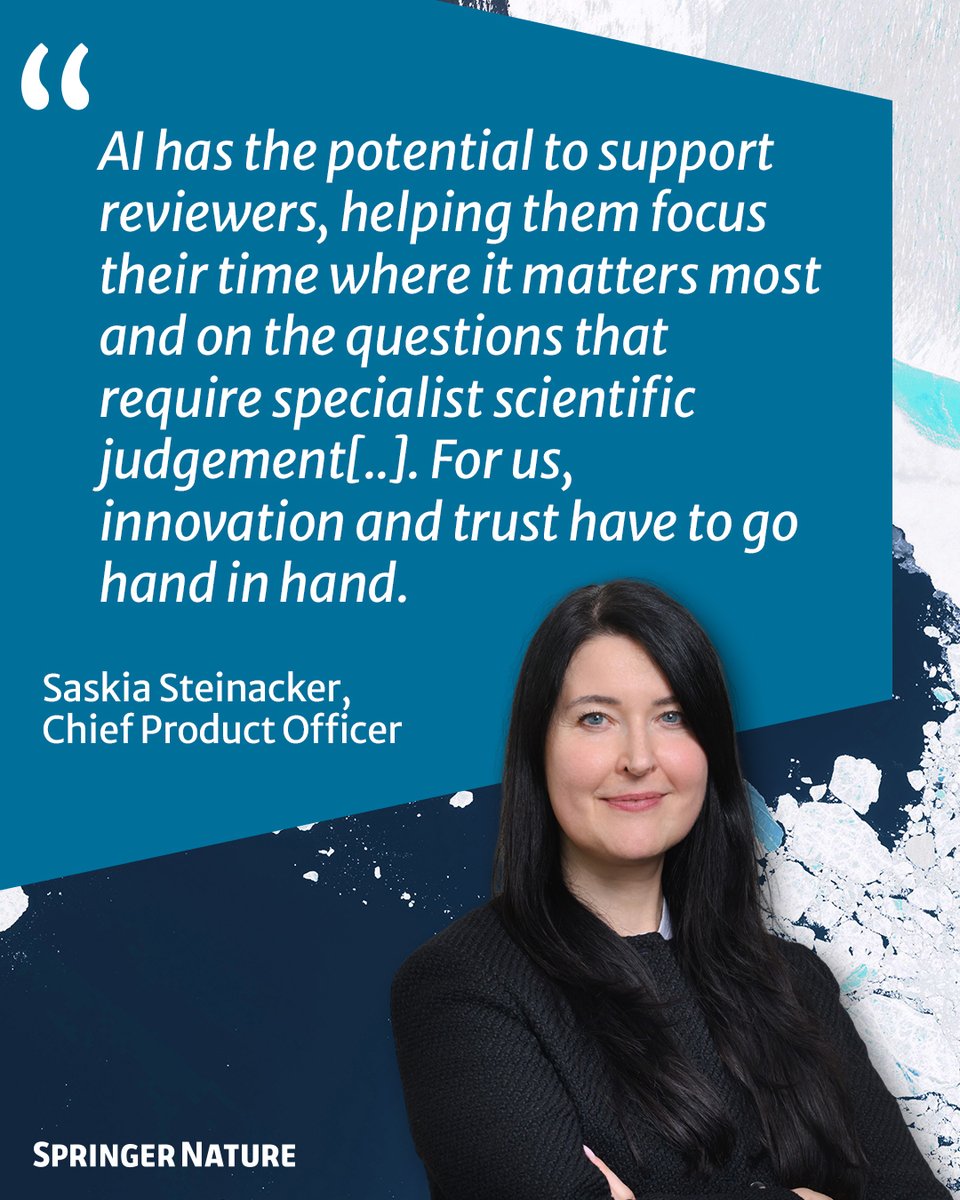
Springer Nature and Google DeepMind partner on an AI peer review assistant built on Gemini and the open-source ADK; a prototype is in testing and human reviewers keep final judgment

On Oct 26 Springer Nature, one of the world's largest research publishers, announced a research partnership with Google DeepMind to co-design an AI peer review assistant. It uses DeepMind's frontier Gemini models and builds on Google's earlier agentic research tools ScholarPeer and Deep Review to help reviewers navigate manuscripts, analyse large amounts of text, charts and figures, and flag areas that may need closer attention. The system is built with Google's open-source Agent Development Kit (ADK) and runs only inside Springer Nature's private Gemini Enterprise environment, so manuscript content stays in its secure environment. A prototype is being tested; the publisher stresses 'human first, AI second' and has not given a launch date or any performance data.

Springer Nature and Google DeepMind partner on an AI peer review assistant built on Gemini and the open-source ADK; a prototype is in testing and human reviewers keep final judgment
⚑ Key Takeaways
  • β€’Partners: Springer Nature (publisher of the largest number of journals and books) and Google DeepMind, announced 2026-10-26 from London, Berlin and New York (press release)
  • β€’Stack: frontier Gemini models plus Google's open-source Agent Development Kit (ADK), building on the ScholarPeer and Deep Review agentic research tools
  • β€’Data isolation: runs only on Springer Nature's private Gemini Enterprise platform, keeping author and reviewer confidentiality
  • β€’Status: prototype in testing; no launch date, journal coverage or accuracy figures have been published
  • β€’Role: helps reviewers find areas needing attention, while final scientific judgment stays with human experts
Read details→
ADSponsored
K
Kimi.ai@Kimi_MoonshotΒ·21h ago
πŸ“‰ Price Cut

Kimi apologizes for K3.1 Pro plan rate limits and wasted quota, gives every subscriber a one-time 25% monthly quota reset and trims subagent calls and output length

At 20:14 UTC on 2026-10-25, Moonshot AI's official account @Kimi_Moonshot ([post](https://x.com/Kimi_Moonshot/status/2114450610724708492)) acknowledged rate limits and unnecessary quota consumption on the K3.1 Pro subscription plan, saying "these were our issues, and we should have fixed them sooner." Every subscriber on every plan gets a one-time usage reset that restores 25% of their monthly quota (usage below 25% resets to zero), equal to about one week of usage; usage bars update by end of day PST. Kimi also adjusted the plan's parameters and is cutting unnecessary subagent calls and output length so quota lasts longer.

⚑ Key Takeaways
  • β€’Compensation: a one-time 25% monthly quota restore, about 1 week of usage (official post)
  • β€’Users below 25% usage are reset to zero; applies to every subscription plan
  • β€’Timing: usage bars update by end of day PST on Oct 25 (about 15:00 SGT on Oct 26)
  • β€’Fix direction: fewer unnecessary subagent calls, shorter outputs and adjusted plan parameters
  • β€’Context: K3.1 Pro launched Oct 23 with API pricing of $2/$10 per million tokens (vendor figures)
Read details→
M
Matt Pocock@mattpocockukΒ·1d ago
πŸ› οΈ Tooling

X discussion: Matt Pocock sketches the ideal "language for agents" (Rust speed, Go-sized design space, strictest verification) and names Bend; Chris Lattner replies with Mojo

At 17:23 UTC on 2026-10-25, TypeScript educator Matt Pocock (@mattpocockuk, author of Total TypeScript and AI Hero) posted ([post](https://x.com/mattpocockuk/status/2114407583167705279)) that the next great "language for agents" should be as fast as Rust, have as little design space as Go, and have the strictest type/verification system ever written, calling Bend "an interesting first effort". When we pulled it, the post had about 3,130 likes, 84 reposts, 264 replies, 786 bookmarks and 220K views, and it reached X's trending stories. Mojo creator Chris Lattner replied ([reply](https://x.com/clattner_llvm/status/2114498806146531752)) recommending Mojo and suggesting "can target all hardware" be added to the list. This is an opinion debate, not a verified conclusion.

⚑ Key Takeaways
  • β€’Main post: post, published 17:23 UTC on 10-25, with about 3,130 likes, 84 reposts, 264 replies, 786 bookmarks and 220K views when we pulled it
  • β€’Three criteria: Rust-level speed, a Go-sized design space (few ways to write the same thing), and the strictest type/verification system ever written, so the compiler rather than a human catches agent mistakes
  • β€’Chris Lattner replied recommending Mojo, citing advanced type features such as linear types and symbolic constraints, and suggested adding "can target all hardware" (reply, about 40 likes when pulled)
  • β€’Bend creator Victor Taelin (@VictorTaelin) also joined the thread, saying Bend blocking an agent from breaking an app is "working as intended"
  • β€’No benchmarks or controlled comparisons were shared; whether Bend or Mojo suits agent coding remains personal opinion
Read details→
T
Thorsten Ball@thorstenballΒ·1d ago
πŸ› οΈ Tooling

X discussion: Thorsten Ball's "How I work with Agents" lists 15 habits for coding with AI agents and draws nearly 4K bookmarks

At 15:58 UTC on 2026-10-25, developer Thorsten Ball (@thorstenball) published an X article, "How I work with Agents" ([post](https://x.com/thorstenball/status/2114386050638336082)), summarizing how he works with coding agents "as of October 2026": use only the latest and strongest models, prompt for what you want rather than how to do it, make the whole development lifecycle from deploys to production logs visible to the agent, ask agents for "irrefutable proof", and review only code with a high blast radius. When we pulled it, the post had about 1,935 likes, 143 reposts, 92 replies, 3,981 bookmarks and 137K views, and it reached X's trending stories. This is a personal account of practice presented as opinion, not a verified conclusion.

X discussion: Thorsten Ball's "How I work with Agents" lists 15 habits for coding with AI agents and draws nearly 4K bookmarks
⚑ Key Takeaways
  • β€’Main post: post, published 15:58 UTC on 10-25, with about 1,935 likes, 143 reposts, 92 replies, 3,981 bookmarks and 137K views when we pulled it; bookmarks are about twice the likes, suggesting many readers saved it as a checklist
  • β€’Models: the author says to use only the latest and strongest models, because when a model is wrong 10% of the time you do not know which 10%, so you end up retrying
  • β€’Prompting: describe the outcome, for example "Make the bytecode compiler and VM AS FAST AS YOU CAN. Do not stop until it's 2x faster."
  • β€’Verification and review: ask agents for end-to-end walkthroughs, demo videos and before/after numbers as proof; the author personally reviews only high-blast-radius changes such as fewer than 5 central files and database migrations
  • β€’Workflow: do not wait for agents, let them wait on you; the author calls schedules, wake-ups and heartbeats a "killer feature" and says context compaction works well enough that manual token management is wasted effort
Read details→
E
Elon Musk@elonmuskΒ·1d ago
πŸš€ Release

Grok Bot can now phone people and businesses for you: Elon Musk says it makes the request, takes notes and sends a call summary (0.77 prerelease)

On Oct 25 SpaceXSI CEO Elon Musk (@elonmusk) posted on X that Grok Bot can now call someone or a business for you, make a request on your behalf, take notes on the response and send you a summary of the conversation. The post quoted a third-party rundown of the Grok Bot 0.77 prerelease: it dials, sits on hold, presses keys, gets transferred and shows a live transcript. As of Oct 25 SpaceXSI had not published release notes or docs for the feature, and supported regions, plans and AI disclosure to the callee are not announced.

⚑ Key Takeaways
  • β€’Source: Elon Musk's own X post (post), Oct 25 14:35 UTC
  • β€’Capability: calls a person or business for you, makes the request, takes notes and sends a call summary
  • β€’Prerelease rundown (third-party @alexmichaelio): dialing, waiting on hold, key presses, transfers and a live transcript
  • β€’Per CellCog and The Tech Signal, the official changelog and docs did not cover the feature as of Oct 25
  • β€’At capture the post had about 14.4K likes, 1,399 reposts, 3,332 bookmarks and 2.31M views
Read details→
ADSponsored
N
Nanbeige@nanbeigeΒ·1d ago
πŸš€ Release

BOSS Zhipin's Nanbeige lab open-sources Nanbeige4.3-33B, a 33B dense agent model with 512K context under Apache 2.0, reporting 80.9 on Terminal-Bench 2.1 vs 73.0 for Qwen3.8-27B

At 12:11 UTC on 2026-10-25, the Nanbeige LLM Lab of BOSS Zhipin (Kanzhun Limited) announced Nanbeige4.3-33B from its account @nanbeige ([post](https://x.com/nanbeige/status/2114328933181333798)), with the model and its Base version released as open weights on Hugging Face under Apache 2.0 ([model card](https://huggingface.co/Nanbeige/Nanbeige4.3-33B)). It is a 33B dense model on a Llama-style architecture with a 512K context window, positioned as the teacher model of the Nanbeige4.3 series that will be distilled into smaller models such as Nanbeige4.3-3B. The official model card compares it with Qwen3.8-27B, Muse-Glimmer-30B and Gemma4-31B using the same harness at highest thinking effort: 80.9 on Terminal-Bench 2.1 (Qwen3.8-27B 73.0) and 65.5 on DeepSWE (42.5), but 60.3 on SWE-Bench Pro, slightly below Qwen's 61.7, and 84.8 on GDPval vs 86.4. All figures are self-reported and not yet independently reproduced.

⚑ Key Takeaways
  • β€’Official sources: @nanbeige post on X and the Hugging Face model card; the post had about 616 likes, 79 reposts and 38K views when we pulled it
  • β€’Specs: 33B dense, Llama-style architecture, 512K context, Apache 2.0, with a Base checkpoint released too
  • β€’Self-reported coding scores: Terminal-Bench 2.1 80.9, Terminal-Bench 4.0 23.8, DeepSWE 65.5, SWE-Bench Pro 60.3 (Qwen3.8-27B: 73.0, 6.3, 42.5, 61.7)
  • β€’Self-reported cowork scores: Automation Bench 54.2, JobBench 44.8, GDPval 84.8 (Qwen3.8-27B: 38.3, 34.5, 86.4)
  • β€’Deployment: Transformers, SGLang and vLLM, with official examples using 4-way tensor parallelism; Nanbeige4.3-3B distillation is next
Read details→
A
Arpit Bhayani@arpit_bhayaniΒ·1d ago
πŸ› οΈ Tooling

X discussion: engineer Arpit Bhayani says "no human will ever write code better than LLMs", drawing 7K+ likes, 240+ replies and a debate over AI coding ability

At 13:37 UTC on 2026-10-25, engineer Arpit Bhayani (@arpit_bhayani) posted: "No human will ever write code better than LLMs. Accept this fact, stop pretending, and move on." ([post](https://x.com/arpit_bhayani/status/2114350692551082390)). When we pulled it, the post had about 7,193 likes, 496 reposts, 104 quotes, 241 replies, 529 bookmarks and 174K views, and it reached X's trending stories. Replies are split: some agree LLMs already write code faster and better, while others push back that LLMs often produce more code than a task needs and that production edge cases, architecture and final verification still depend on people. This is an X discussion presented as opinions, not a proven conclusion.

⚑ Key Takeaways
  • β€’Main post: Arpit Bhayani's post, published 13:37 UTC on 10-25, with about 7,193 likes, 496 reposts, 104 quotes, 241 replies, 529 bookmarks and 174K views when we pulled it
  • β€’The wording is "No human will ever write code better than LLMs. Accept this fact, stop pretending, and move on"; it is a personal opinion with no data or experiment attached
  • β€’For: one reply says the author coded for years and LLMs now code better and faster than they do
  • β€’Against: other replies say LLMs tend to generate far more code than a simple use case needs, and that browser quirks, accessibility and production edge cases still need human judgment
  • β€’Common ground: many replies place human value in design, supervision and verification; layoff and hiring-ratio figures circulating online were not verified here, so we do not use them
Read details→
M
Model Context ProtocolmodelcontextprotocolΒ·1d ago
πŸ› οΈ Tooling

MCP reference servers v2.1.0 fix eight vulnerabilities: upgrade filesystem and everything to 2.0.1 and fetch to 2026.10.24

On Oct 25 (UTC) the official Model Context Protocol servers repo shipped v2.1.0, fixing eight vulnerabilities in three reference servers: symlink races, trailing quote/whitespace path bypasses and case-insensitive symlink bypasses in filesystem; cross-origin calls over HTTP/SSE in everything; and IDNA host-name and NAT64 internal-address reachability plus robots.txt not rechecked after redirects in fetch. The maintainers warn that npm users still on date versions (2025.x/2026.x) will not be offered the upgrade and must install 2.0.1 explicitly, and that the filesystem write issue is only partly fixed on Windows.

⚑ Key Takeaways
  • β€’Eight vulnerabilities fixed across three servers (release notes)
  • β€’filesystem, 4 fixes: symlink race on writes, trailing quote/whitespace bypass, case-insensitive symlink bypass, list_directory_with_sizes leaking metadata outside allowed dirs
  • β€’everything, 1 fix: HTTP/SSE transports no longer send Access-Control-Allow-Origin: *, so web pages can no longer call tools like get-env
  • β€’fetch, 3 fixes: IDNA host-name check vs. connection mismatch, NAT64-wrapped private IPv4, robots.txt not rechecked after redirects
  • β€’Date-versioned npm installs must run npm install @modelcontextprotocol/server-filesystem@2.0.1 explicitly; Windows is only partly fixed
Read details→
T
Tibo@thsottiauxΒ·1d ago
πŸ› οΈ Tooling

X discussion: OpenAI Codex/ChatGPT lead Tibo posts a hiring call to "scale dots to 1B users", and Meta chief AI officer Alexandr Wang replies with a Muse jab

At 19:21 UTC on 2026-10-24, Tibo (@thsottiaux), whose X bio reads "Codex & ChatGPT @OpenAI", posted: "DM if you want to help scale dots to 1B users and have done similar things in the past" ([post](https://x.com/thsottiaux/status/2114074885622501706)); it had about 5,524 likes, 1,506 replies and 710K views when we pulled it. Alexandr Wang (@alexandr_wang), whose X bio says he is chief AI officer at Meta, replied "oops you misspelled muse" (about 1,935 likes), and Tibo shot back with "Celebrate your 12 users" (about 1,845 likes). The public back-and-forth between the two companies' executives became one of the most talked-about AI threads of the past half day. It is a hiring post and banter between executives, not a user count or product plan published by OpenAI.

⚑ Key Takeaways
  • β€’Main post: Tibo's post, about 5,524 likes, 126 reposts, 131 quotes, 1,506 replies, 515 bookmarks and 710K views when we pulled it
  • β€’Alexandr Wang replied "oops you misspelled muse" (post), about 1,935 likes and 240K views; Muse is the Meta model and product name he has been promoting lately
  • β€’Tibo fired back: "Step 1: Quit posting butts and go buy containers / Step 2: ??? / Step 3: Celebrate your 12 users" (post), about 1,845 likes and 185K views
  • β€’Wang answered "is the implication you have under 12 users?" (post), about 222 likes
  • β€’"1B users" is a goal stated in a hiring post; OpenAI has not published Dots' actual user count, so this entry is treated as an X discussion
Read details→
C
CapCut@capcutappΒ·1d ago
πŸ› οΈ Tooling

CapCut announces a ChatGPT plugin is coming soon, bringing its video generation and editing tools inside ChatGPT with drafts that move to the CapCut web editor

At 18:34 UTC on 2026-10-24, during its CapCut World event in Los Angeles, ByteDance's CapCut announced from its official account (@capcutapp) that a new CapCut plugin is coming soon to ChatGPT ([post](https://x.com/capcutapp/status/2114062937094823955)). According to CapCut, the plugin brings its video editing and generation tools inside ChatGPT: users can start with an idea in ChatGPT, create it with the plugin right in the chat, then move the draft to the CapCut web editor to refine and publish. When we pulled it, the post had about 3,646 likes, 319 reposts, 504 replies and 450K views. The event site lists OpenAI's Head of Partnerships Mahak Sharma and Head of Creator Product Sam Yam as speakers. Many creator posts on X say the plugin is already in early access on ChatGPT desktop with mobile and web around mid-November, but CapCut's own post still says coming soon, so timing and pricing should be taken from CapCut's later announcements.

⚑ Key Takeaways
  • β€’Official source: CapCut's post on X, published 18:34 UTC on 10-24, with about 3,646 likes, 319 reposts, 216 quotes, 504 replies and 450K views when we pulled it
  • β€’What it does: CapCut's video editing and generation tools inside ChatGPT, so a chat idea can become a video draft directly
  • β€’Workflow: drafts made with the plugin can move to the CapCut web editor for further editing, sharing and publishing
  • β€’OpenAI involvement: the CapCut World Los Angeles site lists OpenAI's Mahak Sharma (Head of Partnerships) and Sam Yam (Head of Creator Product) as speakers
  • β€’Status: CapCut says coming soon; creator claims of desktop early access now and mobile and web in mid-November are not confirmed by CapCut, and pricing is not announced
Read details→
Z
Zhihao Zhan (Microsoft Research Asia)@zhan8855Β·2d ago
πŸ› οΈ Tooling

Microsoft Research open-sources Agensh, a self-organizing harness that scales to 1,024 coding agents

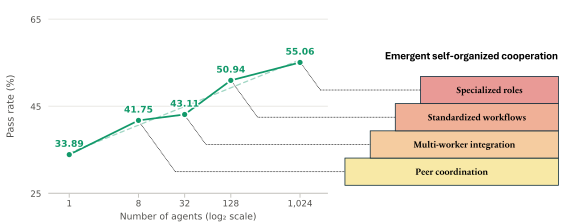
Zhihao Zhan, a Microsoft Research Asia researcher and co-first author, announced on X on Oct 24 that Agensh is now open source under MIT. It is a multi-agent coding harness with no central orchestrator: workers claim sub-tasks, verify and merge asynchronously. Per the authors, scaling from 1 to 1,024 agents lifts the final pandoc test-pass rate from 33.89% to 55.06%.

Microsoft Research open-sources Agensh, a self-organizing harness that scales to 1,024 coding agents
⚑ Key Takeaways
  • β€’Open-sourced on Oct 24 under MIT: harness, experiment launch scripts and reproduction guide at microsoft/Agensh.
  • β€’Authors report: on the 5 hardest ProgramBench tasks (GPT-5.6-sol high, 6h budget, no Internet), mean final test-pass rate rises from 19.31% with 1 agent to 28.78% with 128 agents, about 49% relative.
  • β€’Authors report: on pandoc, 1 to 128 to 1,024 agents moves the pass rate from 33.89% to 50.94% to 55.06%.
  • β€’Coordination runs through Gitea (shared workspace), Mattermost (messaging) and a shared-context board adapted from DeLM; each worker uses the Copilot harness agent loop.
  • β€’The release ships a single-node Docker Compose team setup plus a single-agent baseline, both on native Copilot ACP sessions.
Read details→
T
Thariq@trq212Β·2d ago
πŸ› οΈ Tooling

X discussion: Thariq of the Claude Code team says he has left Anthropic; his farewell post drew 24K likes, and a joking "is Opus 5.5 dumber" reply also went viral

On 2026-10-24 (04:04 UTC), Thariq (@trq212), whose X bio reads "Claude Code @anthropicai", posted that he has left Anthropic after more than a year working on Claude Code and plans to take a break before starting something new. When we pulled it, the post had about 24K likes, 2.82M views and 1,800+ replies, with Claude Code colleagues such as Lydia Hallie saying goodbye. About 20 minutes later he replied to Lydia, "wait is it just me or is Opus 5.5 dumber", and that joke drew 8,600+ likes. This is an X discussion and a personal post, not an official Anthropic announcement.

⚑ Key Takeaways
  • β€’The farewell post went up at 04:04 UTC on 2026-10-24 and had about 24,160 likes, 2.82M views, 1,813 replies and 828 reposts when we pulled it (post)
  • β€’In his words, he worked on Claude Code for more than a year and it is "time for a bit of a break before diving into something new"; he did not say where he is going
  • β€’He pointed readers to @addyosmani, @lydiahallie, @_catwu, @ClaudeDevs and Claude Code creator @bcherny
  • β€’The "is Opus 5.5 dumber" reply had about 8,659 likes and 584K views; it riffs on the long-running community joke that models get "dumber" and is not an evaluation result (reply)
Read details→
M
Md Ismail Ε ojal@0x0SojalSecΒ·2d ago
πŸ› οΈ Tooling

X discussion: viral posts claim Anthropic "quietly killed" Claude's reverse engineering with the REA toolkit after a Samsung TV firmware teardown went viral; no official statement yet

One of the hottest AI developer topics on X over the past day. At 21:55 UTC on 2026-10-23, security account @0x0SojalSec (Md Ismail Ε ojal) posted that "Claude can no longer Reverse Engineer Anything" and that "Anthropic just quietly killed REA", tying the timing to viral cases of people using Claude to reverse engineer Samsung TV firmware and find data-collection services; the post had about 8,345 likes, 1,055 reposts and 514K views. An earlier post making the same claim by @AbhinavXJ had about 10,477 likes and 640K views. As of this run we found no statement from Anthropic or its staff, and some users replied that it still works for them. These are user reports and opinions on X, not a confirmed policy change.

X discussion: viral posts claim Anthropic "quietly killed" Claude's reverse engineering with the REA toolkit after a Samsung TV firmware teardown went viral; no official statement yet
⚑ Key Takeaways
  • β€’Main post: @0x0SojalSec's post, about 8,345 likes, 1,055 reposts, 2,545 bookmarks and 514K views when we pulled it
  • β€’An earlier post making the same claim: @AbhinavXJ's post (11:16 UTC on 10-23) said "anthropic just killed the REA" and argued this is why local models matter; about 10,477 likes and 640K views
  • β€’One trigger was a Samsung TV firmware teardown: @log4j posted that the TV classifies the audio it hears before reporting back, about 6,720 likes; in another post he said his OpenAI account was banned after local reverse engineering work tripped its checks, about 6,454 likes and 729K views
  • β€’REA is an open-source reverse engineering toolkit (GitHub morluto/rea), showing about 377K stars in the GitHub API this run; we covered its viral launch on 10-08
  • β€’We found no response from Anthropic's official accounts or staff this run; some users replied that REA still works for them and is refused only in specific cases, so the real scope awaits an official word
Read details→
G
Grok ImagineimagineΒ·2d ago
πŸš€ Release

X discussion: Grok Imagine's official account posts Episode 1 of an AI-made Odyssey series (about 7 minutes, 4K), drawing 2.4M views and a debate over whether AI video can carry a long story

At 19:23 UTC on 2026-10-23, the official Grok Imagine account (@imagine) posted Episode 1 of its Odyssey series ([post](https://x.com/imagine/status/2113712964419063911)), saying it was made with Grok Imagine in a creative collaboration with Wonder Studios (@WonderStudiosX) and director Dev Walker (@glumlot_). The video runs about 7 minutes 12 seconds and is served in a 3840x2160 version. When we pulled it, the post had about 12,055 likes, 1,275 reposts, 433 quotes, 974 replies and 2.4M views, and the account asked whether people want a full breakdown of how it was made. Discussion on X kept growing over the past half day: supporters see it as AI video moving from short clips to whole episodes, while critics point to uneven acting and visible AI artifacts. This is an X discussion presented as opinions, not a verdict on the film's quality.

⚑ Key Takeaways
  • β€’Main post: official Grok Imagine post, published 19:23 UTC on 10-23, with about 12,055 likes, 1,275 reposts, 433 quotes, 974 replies, 6,361 bookmarks and 2.4M views when we pulled it
  • β€’What the account says: made with Grok Imagine, in collaboration with Wonder Studios and director Dev Walker; the video is about 7 minutes 12 seconds and comes in a 4K (3840x2160) version
  • β€’The account asked whether people want a full breakdown of how it was made; no workflow, clip count or cost has been published yet
  • β€’Opinions are split: some say AI video can now ship by the episode and that directing and storyboarding matter more than the model; others criticize uneven acting and visual artifacts
  • β€’Treated as an X discussion; production-day and asset counts circulating online are not confirmed by the official account, so we do not use them
Read details→
K
Kimi.ai@Kimi_MoonshotΒ·2d ago
πŸš€ Release

Moonshot launches Kimi K3.1 Pro: 2.8T-total / 104B-active open-weight MoE with 1M context, 65.7% on Terminal-Bench 4.0, API at $2/$10, weights by Nov 4

On 2026-10-23 (17:15 UTC) the official @Kimi_Moonshot account launched Kimi K3.1 Pro, alongside K3.1 Pro Highspeed (2-3x faster). Both are live on Kimi.ai, Kimi Work, Kimi Code and the Kimi API, and full weights are promised by 2026-11-04. The official tech blog describes it as a post-trained version of K3 with much larger multi-domain joint RL: a 2.8T-total / 104B-active MoE, 1M-token context, multimodal. Vendor-reported scores: 65.7% on Terminal-Bench 4.0 (GPT-6 Astra 58.2%, Claude Opus 5.5 66.4%) and 92.7% on BenchCAD with tools. The Kimi API pricing page lists kimi-k3.1-pro at $2 input, $10 output and $0.20 cached input per million tokens, down from K3 at $3/$15.

Moonshot launches Kimi K3.1 Pro: 2.8T-total / 104B-active open-weight MoE with 1M context, 65.7% on Terminal-Bench 4.0, API at $2/$10, weights by Nov 4
⚑ Key Takeaways
  • β€’2.8T-total / 104B-active MoE, 1M-token context, multimodal; full weights promised by 2026-11-04 (official blog)
  • β€’Vendor-reported: 65.7% on Terminal-Bench 4.0, ahead of GPT-6 Astra (58.2%) and just behind Claude Opus 5.5 (66.4%); 61.2% on the internal Kimi Code Bench 3.0 Long-horizon (K3: 55.95%)
  • β€’API pricing: kimi-k3.1-pro at $2 input / $10 output / $0.20 cached input per million tokens; Highspeed at $4 / $20 (pricing page)
  • β€’On the internal Kimi Hallu Bench Hard stress test, claim-level hallucination fell from 23.4% (K3) to 8.3%; Moonshot notes this is not a daily-use error rate
  • β€’Cyber-related data was removed from mid-training and RL for the open-weight release: xdev-bench-hard pass@3 drops from 90.5% (unmitigated checkpoint) to 81.0%
Read details→
N
NVIDIA AI@NVIDIAAIΒ·3d ago
πŸš€ Release

NVIDIA open-sources Nemotron 3.5 Bolt E4B 4GB, a Gemma 4 E4B-based small model for local assistants, characters and robots with tool use

On 2026-10-23 (15:41 UTC) the official @NVIDIAAI account announced Nemotron 3.5 Bolt E4B 4GB, a small open model for local assistants, interactive characters and robots that can hold a conversation and use tools. The official Hugging Face model card says it is post-trained from Gemma-4-E4B-it, has 8B total parameters (4B effective), ships in Q4_K_M quantization, supports up to 64K input and 64K output tokens, and has a switchable thinking mode, plus a DFlash speculative-decoding drafter and a BF16 version. Weights, data and recipes are open under the OpenMDW-1.1 license, with commercial use allowed. On the model card the 4GB build scores 55.60 on MultiChallenge (Gemma4 E4B-it at the same quantization 39.36, Qwen3.5 4B 52.23), but trails Qwen3.5 4B on Tau2-Bench (52.32) and BFCL-v3 (67.31).

NVIDIA open-sources Nemotron 3.5 Bolt E4B 4GB, a Gemma 4 E4B-based small model for local assistants, characters and robots with tool use
⚑ Key Takeaways
  • β€’NVIDIA officially released Nemotron 3.5 Bolt E4B 4GB for local assistants, interactive characters and robots
  • β€’Post-trained from Gemma-4-E4B-it: 8B total parameters (4B effective), Q4_K_M quantization, 64K context, switchable thinking mode
  • β€’Open weights, data and recipes under the OpenMDW-1.1 license with commercial use allowed, plus a DFlash speculative-decoding drafter
  • β€’Model card results: 55.60 on MultiChallenge leads its size class, but it trails Qwen3.5 4B on Tau2-Bench and BFCL-v3
Read details→
B
Block@blocksΒ·3d ago
πŸš€ Release

Block unveils Dessa: a full-duplex speech model trained from scratch only on human conversation audio, running locally on a MacBook Pro M4 Max

On 2026-10-23 (16:53 UTC) the official @blocks account unveiled Dessa, and Jack Dorsey called it the most authentic full-duplex speech model ever built. The official page block.xyz/dessa says Dessa is a true speech-to-speech model trained only on recordings of human conversation, with no text and no pretrained models. It is full-duplex, so it listens and talks at the same time, cuts in and backchannels naturally, runs faster than real time, and runs locally on a MacBook Pro M4 Max or better. Block says it was trained on a single NVIDIA GB200 NVL72 and learned language from hundreds of times fewer words than LLMs. There is no public API or weights yet; a small group of AI safety researchers is getting early access.

Block unveils Dessa: a full-duplex speech model trained from scratch only on human conversation audio, running locally on a MacBook Pro M4 Max
⚑ Key Takeaways
  • β€’Trained only on human conversation audio, from scratch, with no text and no pretrained models (official page)
  • β€’Full-duplex speech-to-speech: listens while talking, cuts in and backchannels, and natively hears and expresses emotion, sarcasm and laughter
  • β€’Inference runs faster than real time and runs locally on a MacBook Pro M4 Max or better
  • β€’Block says training used a single NVIDIA GB200 NVL72 and needed hundreds of times fewer words than LLMs
  • β€’No public API, weights or third-party benchmarks yet; early access is limited to a small group of AI safety researchers
Read details→